Catalina Island
Mining and human settlement on a Southern California island
| Project Information | Date visited: Spring 2024 |
| Location: Los Angeles County | Topics of interest: mining |
| Airport of departure: KMYF | Airplane: CE 172 Slant G |
The Channel Islands are an eight-island archipelago off the coast of Southern California. While most of these islands are undeveloped, Santa Catalina Island has a significant permanent civilian population of 4200, 90% of which who live in the harbor town of Avalon. The island supported Native American settlements as early as 7000 BC but those populations were eventually driven off by American migrants in the 1800s. In 1919, the island was bought by William Wrigley, Jr–the wealthy entrepreneur with the eponymous chewing gum. Much of the island’s development is credited to his investment. In 1924, a herd of 14 bison was brought to the island for a movie. With Wrigley’s permission, they were allowed to stay and the island now supports a naturalized population of 150 bison. As far as the sea goes, the deep coastal upwelling makes Catalina Island one of the best regional locations for cold water diving, with rich kelp forests and unparalleled visibility. In this work, we explore the significant and complex human impact on this coastal bastion.
Catalina Island
The Pebbly Beach Quarry is a key feature in the story of Santa Catalina Island’s relationship to the mainland. Tucked away on the south end of the island and strategically positioned away from the major ferry routes, few people know of its existence. In an interview with a young adult resident, we were told how the Quarry is a prominent yet subtle part of life on the island. When asked about the general population’s thoughts, this individual felt that most knew it was there, but as it was out of sight, it was frequently out of mind, although one of his friends did work in the quarry. For an island whose main economy today is tourism, there is certainly a benefit to a domestic income. We were told that while there is a small minority of residents who disapprove of the quarry, they are not very vocal today–perhaps because there is little to be done.
Pebbly Beach Quarry
We also interviewed the manager of Santa Catalina’s only airport. An older gentleman who often flies over from the mainland, he recalled that the quarry was much smaller even a few decades ago. He explained that in recent years, the rocks from the quarry were taken to Anaheim Bay off the Southern California coast at Seal Beach and used to split the Huntington docks into military and civilian zones. However, Catalina’s rocks may also be found in harbors all along the Southern California coastline.
The environmental impact of the quarry is not well studied. There is certainly some loss of habitat for the over 60 endemic species to Santa Catalina, as well as runoff into the island’s coastal waters. That said, the effects of the quarry do seem contained, in contrast to mining projects that release pollutants into the ground which find their way into surface and ground-water, negatively affecting areas well beyond the immediate site.
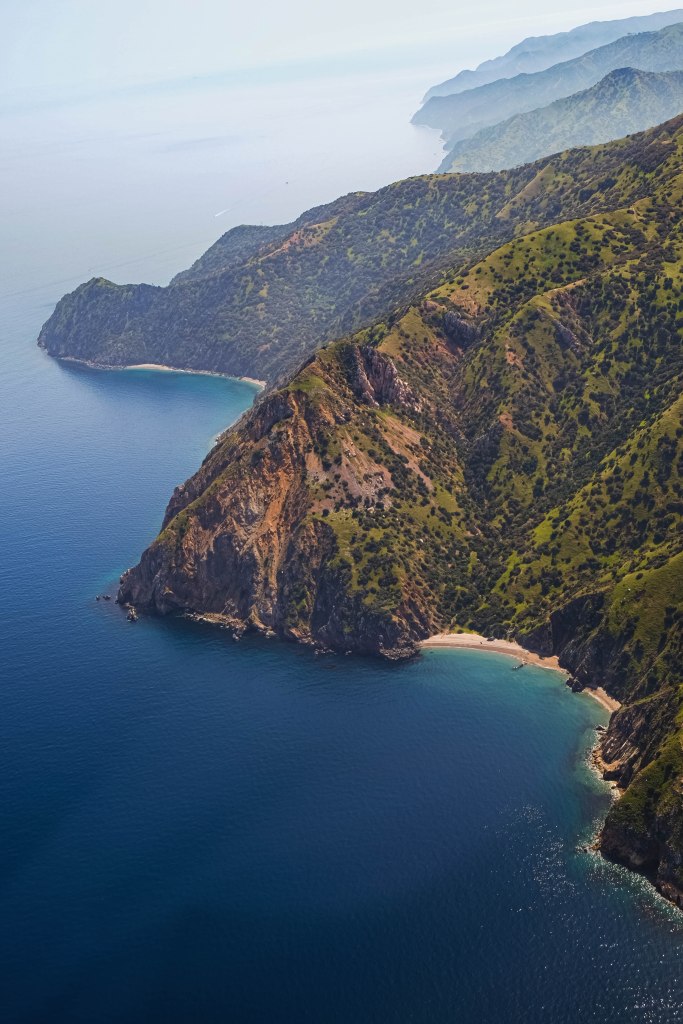
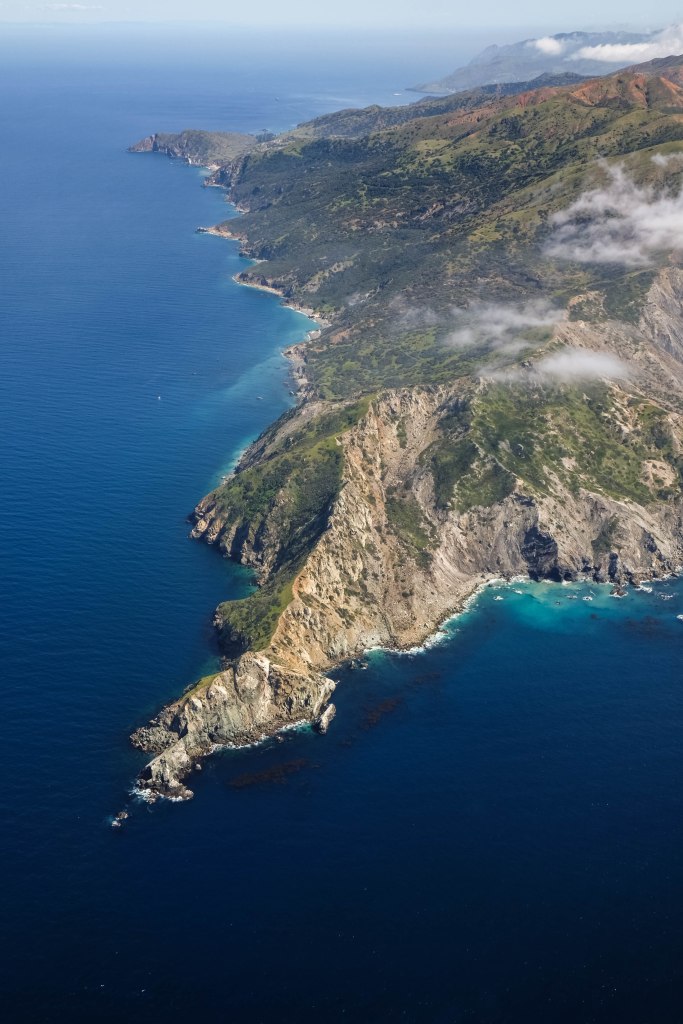
In these images, we highlight three major perspectives: the untouched natural beauty of Catalina; the island’s human settlements; and the quarry that scars the land.
Human footprints
Further information about the history of the quarry can be found here:
https://www.islapedia.com/index.php?title=Pebbly_Beach,_Santa_Catalina_Island
https://www.islapedia.com/index.php?title=Quarry:_Santa_Catalina_Island
/


 The Altitude Project